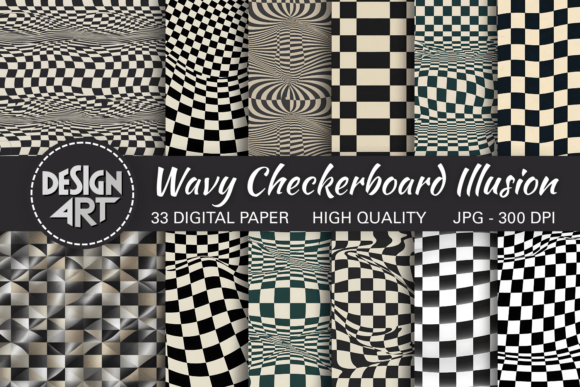
Wavy Checkerboard Illusion Pattern: Bold & Dynamic Design
There’s a particular kind of energy that comes from optical illusions in design. They command attention, create a sense of movement, and make a viewer pause for a second look. The Wavy Checkerboard Illusion Pattern takes a universally recognized geometric form—the checkerboard—and injects it with dynamic, undulating motion. This isn’t a static, flat grid. Instead, the squares appear to bend, ripple, and flow into one another, creating a mesmerizing sense of depth and rhythm. It’s a pattern that feels both contemporary and timeless, leveraging the classic appeal of geometry with a modern, abstract twist.
Understanding the Visual Character
At its core, this pattern is about controlled distortion. The traditional checkerboard is rigid, orderly, and predictable. The Wavy Checkerboard Illusion Pattern disrupts that order. The lines warp and the squares stretch, creating a visual effect that suggests movement—like looking at a reflection on disturbed water or a heat haze rising from pavement. This creates a powerful sense of three-dimensional space on a two-dimensional surface. The personality of the pattern is bold, energetic, and intellectually engaging. It doesn’t just decorate a surface; it transforms it into an active visual experience.
This style sits at the intersection of several design trends. It nods to Op Art’s fascination with optical effects, embraces the clean geometry of modernism, and carries the fluidity of contemporary abstract art. The result is a versatile visual asset that can feel futuristic, artistic, or purely playful, depending on the color palette and application. It’s a pattern that doesn’t whisper; it makes a statement.
Strategic Applications for Maximum Impact
The true value of a pattern like this lies in its application. Where does such a bold, dynamic design element work best? The key is to use it in contexts where visual impact and differentiation are primary goals.
In brand identity, the Wavy Checkerboard Illusion Pattern can serve as a powerful secondary brand asset. Imagine it as the background for a social media campaign, the inner lining of a premium packaging box, or the cover of a lookbook. It injects instant personality and memorability. For a tech startup, it can suggest innovation and disruption. For a fashion brand, it conveys avant-garde style. For an art gallery or a creative agency, it becomes a signature visual element that communicates a bold, forward-thinking ethos.
For packaging design, this pattern is a game-changer. In a crowded retail environment or an online marketplace, a product wrapped in a wavy checkerboard illusion immediately stands out. It creates curiosity and a tactile expectation—even before a customer touches the product. It works exceptionally well for brands in cosmetics, gourmet foods, boutique spirits, or any product where the unboxing experience is part of the value proposition. The pattern’s seamless nature allows it to cover entire surfaces without visible breaks, creating a high-end, custom feel.
The applications extend beautifully into textile and apparel design. A dress, a scarf, or a tie featuring this pattern becomes a wearable piece of abstract art. It’s particularly effective for items where pattern scale can be showcased, like a full-coverage print on a silk blouse or a bold accent on a backpack. In home décor, it can elevate throw pillows, curtains, or a statement wall hanging, adding a layer of sophisticated visual interest to an interior space.
For print and digital publishing, the pattern offers a fantastic solution for backgrounds that need energy without competing with foreground content. Use it on the cover of a magazine, the background of a website hero section, or the endpapers of a book. It provides a dynamic backdrop that enhances perceived quality and modernity. When used as a digital paper for scrapbooking or journaling, it offers a contemporary alternative to traditional floral or geometric prints.
Practical Considerations for Seamless Integration
Adopting any new design asset requires thoughtful evaluation. Here’s how to approach integrating the Wavy Checkerboard Illusion Pattern into your workflow effectively.
First, consider the scale and color. The provided files are high-resolution (3072 x 3072 px), making them suitable for large-format printing. However, the pattern’s impact changes with scale. A large-scale repeat will emphasize the dramatic, undulating waves. A smaller, tiled scale will create a more subtle, textural effect from a distance. Experiment with both. Color is your primary tool for matching the pattern to your project’s mood. A monochrome version in black and white is stark and graphic. Soft, muted tones make it approachable for stationery or baby products. High-contrast, vibrant colors amplify its energy for posters or youth-oriented branding.
Second, test font pairings and compositional hierarchy. If you’re using this pattern as a background for typography, readability is paramount. Pair it with clean, highly legible sans serif fonts for body text. For headlines, you can experiment with bold serif fonts or modern display typefaces that complement the pattern’s geometric energy. Always place text on a solid color panel or a semi-transparent overlay to ensure clarity. The pattern should support your message, not obscure it.
Third, leverage the included file formats. The JPEG files are ready for immediate use in most graphic design software, from Adobe Photoshop and Illustrator to Canva and Procreate. Because the pattern is seamless, you can easily tile it to cover any area. For ultimate flexibility in a vector-based project, you could trace the core grid structure in Illustrator to create a fully scalable vector version, though this is an advanced step for most users.
Finally, understand the licensing and usage. As a digital product, the Wavy Checkerboard Illusion Pattern Pack is designed for commercial use, which is a significant advantage. You can incorporate it into client projects, products for sale, and marketing materials without additional fees. This makes it a cost-effective design asset for freelancers, small businesses, and creators who need professional-grade visuals without the overhead of commissioning custom artwork.
In the end, the most effective way to judge if this pattern is right for your project is to mock it up. Place it on a product template, a social media post draft, or a website layout. See how it interacts with your other visual elements—your logo, your photography, your typography. Does it elevate the design? Does it communicate the right feeling? The Wavy Checkerboard Illusion Pattern is a powerful tool for adding a bold visual twist. Used with intention, it can transform ordinary projects into captivating experiences that hold attention and leave a lasting impression.