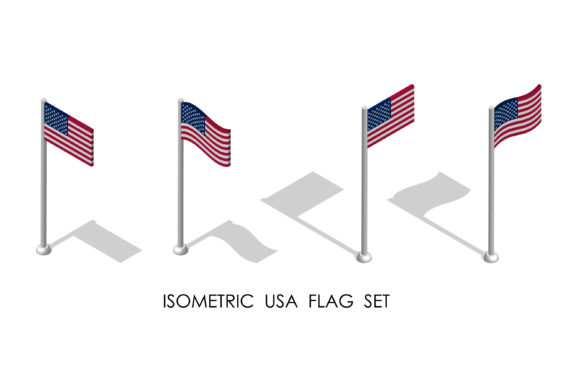
Isometric Flag of United States America: Dynamic 3D Design Asset
In the crowded landscape of digital design, grabbing attention requires more than just flat images and static graphics. We are constantly searching for assets that provide depth, realism, and a unique perspective. One asset that has been gaining significant traction among graphic designers and content creators is the Isometric Flag of United States America. This isn't your standard clipart; it is a sophisticated 3D vector representation of a national symbol, offering a fresh take on patriotic imagery through the lens of isometric projection.
When we talk about isometric design, we are referring to a method of visually representing three-dimensional objects in two dimensions. Unlike traditional perspective drawing where lines converge at a vanishing point, isometric art maintains a consistent scale regardless of depth. The result is a clean, stylized look that feels both technical and artistic. When applied to the American flag, this technique transforms a familiar icon into a striking piece of modern typography and graphic art. The Isometric Flag of United States America captures the folds, fabric texture, and depth of a real flag without the distortion of a camera lens, making it an incredibly versatile tool for branding and marketing.
The Anatomy of a 3D Vector Icon
Understanding the visual characteristics of this asset is key to using it effectively. At its core, the design relies on precise geometry. The stripes and the canton (the blue section with stars) are not just flat colors; they are rendered to show the ripples and movement of fabric. This creates a tactile quality. You can almost feel the texture of the nylon or polyester just by looking at the vector shapes.
There are two primary states in which you will find this asset: static and in motion.
- The Static Position: This variation usually depicts the flag hanging limply or with very subtle folds. It conveys a sense of solemnity, respect, and stability. It is perfect for formal documents, certificates, or corporate branding where the tone is serious and grounded.
- The Motion on Flagpole: This version captures the wind in the fabric. The Isometric Flag of United States America in motion suggests energy, progress, and vitality. The dynamic curves of the waving stripes add a sense of rhythm to the composition. This style works best for active campaigns, sports branding, or tech startups that want to convey momentum.
Because these are 3D vectors, they offer infinite scalability. Whether you are designing a tiny favicon for a website or a massive billboard, the lines remain crisp. This scalability is essential for maintaining professional standards across various media, ensuring your brand identity remains consistent whether viewed on a mobile screen or a printed banner.
Strategic Applications for Modern Creators
For designers, entrepreneurs, and marketers, the utility of this asset extends far beyond simple decoration. It is a powerful tool for visual storytelling. Here is how different professionals can leverage the Isometric Flag of United States America in their projects.
Branding and Corporate Identity
In the realm of logo design and brand identity, uniqueness is currency. While many competitors might use a standard flat vector flag, incorporating an isometric version immediately elevates your visual language. It suggests that your brand is forward-thinking and pays attention to detail. For companies in logistics, architecture, or tech—industries where "building" and "structure" are key themes—isometric graphics align perfectly with the brand personality.
Digital Marketing and Social Media
On platforms like Instagram, LinkedIn, and Facebook, the scroll is relentless. A standard 2D flag might get lost in the noise. However, the depth and shadow work in an isometric design create a "thumb-stopping" effect. Use the waving variation for social media graphics celebrating the Fourth of July, Veterans Day, or election cycles. The 3D element adds a layer of professionalism that static stock photos often lack.
Editorial and Web Design
Bloggers and publishers can use these assets to break up text-heavy pages. If you are writing about American history, economics, or travel, a high-quality isometric illustration serves as an engaging header image or sidebar graphic. In web design, these vectors can be integrated into UI elements, such as loading screens or "About Us" sections, to build a cohesive visual narrative about the company's origins or values.
Influence on Visual Hierarchy and Engagement
Why does the dimension of a graphic matter so much? It comes down to psychology and visual hierarchy. The human eye is naturally drawn to objects that mimic the real world. By using the Isometric Flag of United States America, you are tapping into this instinct.
The shadows and highlights inherent in the 3D design help separate the foreground from the background. This creates a natural focal point, guiding the viewer's eye exactly where you want it to go. If you place this asset next to a call-to-action (CTA), the flag acts as a visual anchor, increasing the likelihood of engagement.
Furthermore, this style influences brand perception. It signals competence. A flat, pixelated image can make a brand look dated or careless. Conversely, a crisp, well-rendered isometric vector suggests that the business cares about quality. It builds trust with the audience before they even read a word of your copy.
Practical Guidance for Implementation
Integrating a new design asset into your workflow requires some technical consideration. To get the most out of the Isometric Flag of United States America, keep these practical tips in mind.
Evaluating Project Fit
Not every project suits a 3D style. If your existing brand identity is strictly minimalist, flat design (like the old iOS style), a sudden isometric element might feel jarring. However, if your brand uses gradients, shadows, or a "tech-forward" aesthetic, this asset will blend seamlessly. Always evaluate the context. A solemn memorial site might prefer a static, respectful illustration, whereas a youth-focused clothing brand might prefer the high-energy waving flag.
Font Pairing and Typography
The graphic demands a typeface that can hold its own. Because the flag has geometric precision and depth, pair it with modern typography. A geometric sans-serif font often works best, as the clean lines of the letters complement the structured nature of the isometric grid. Avoid overly complex script fonts or handwritten fonts that might clash with the technical precision of the illustration. The goal is balance: the font should support the image, not fight with it.
Color Theory and Backgrounds
While the flag itself contains the classic red, white, and blue, the background color is your decision. To make the 3D effect pop, use a solid, neutral background like dark charcoal, light grey, or white. If you use a busy background, the "floating" illusion of the isometric object can be lost. Ensure there is enough contrast so the white stripes remain distinct from the canvas.
Licensing and Commercial Use
For small business owners and entrepreneurs, the legal aspect of design assets is critical. Most high-quality isometric vectors are premium fonts or assets that require a commercial license. If you plan to use the Isometric Flag of United States America on merchandise (t-shirts, mugs) or in paid advertising, ensure your license covers "print-on-demand" or "merchandising." Free assets often come with restrictions that can cause legal headaches down the road. Investing in a licensed asset ensures you have full rights to your brand identity.
Final Thoughts on a Modern Classic
The American flag is a symbol recognized globally, but how we present it evolves with technology and design trends. The isometric trend has moved beyond simple infographics and into the realm of serious branding assets. By adopting the Isometric Flag of United States America, you are not just adding a picture to a page; you are adding a piece of engineered art.
Whether you are a designer looking to refresh your asset library, a marketer aiming for higher engagement rates, or a publisher seeking to visually enrich your content, this 3D vector offers a solution that is both practical and visually stunning. It bridges the gap between traditional iconography and modern digital aesthetics, making it an indispensable tool in the contemporary creative arsenal.